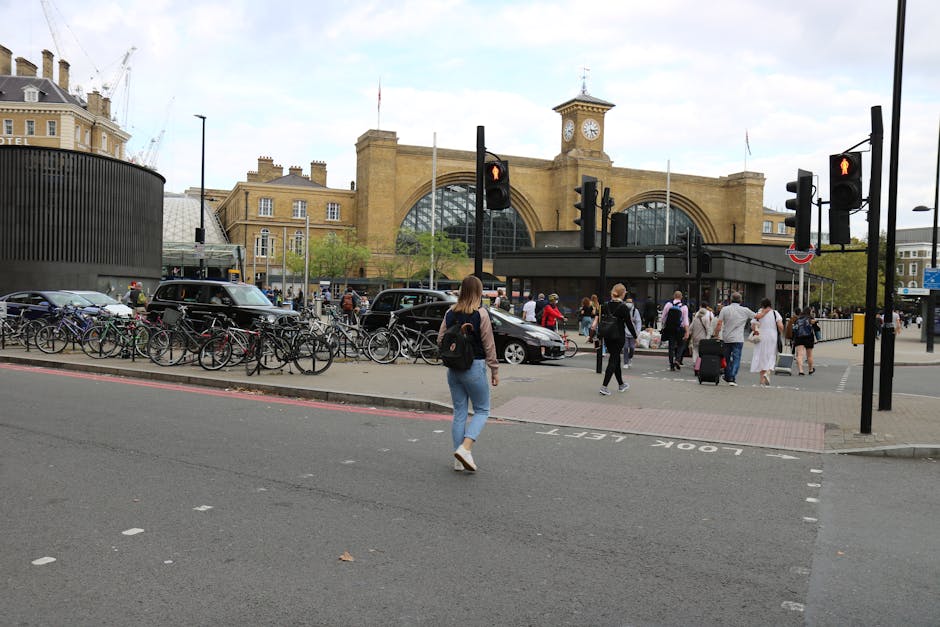
Camden council permit rules for Kings Cross removals

If you are moving in or out of Kings Cross, the parking side of the job can be just as stressful as the lifting. Camden streets are busy, space is tight, and one overlooked permit can turn an otherwise tidy move into a costly headache. This guide explains Camden council permit rules for Kings Cross removals in plain English, so you can plan properly, avoid unnecessary delays, and keep moving day calm. Truth be told, the trick is usually not the packing itself - it is the street logistics.
In the next few sections, you will see how permits typically work, why they matter for Kings Cross removals, what mistakes people make, and how to prepare a move without getting caught out by kerbside restrictions, bay issues, or awkward access. If you also want help with the practical side of moving heavy or awkward items, it can be worth looking at local Kings Cross removals support alongside the permit plan.
Why Camden council permit rules for Kings Cross removals Matters
Kings Cross sits right on the edge of a very busy part of London, so removals here are rarely as simple as arriving and loading. You may be dealing with limited waiting space, residents' bays, loading restrictions, yellow lines, narrow access roads, shared courtyards, or a time limit that feels much shorter than you hoped. Camden council permit rules matter because they help determine where a removal vehicle can stop, how long it can stay there, and whether the move happens smoothly or gets interrupted by enforcement.
That is not just a paperwork issue. If a van cannot park close enough to the entrance, movers end up carrying furniture further than expected. That means more time, more fatigue, and more chance of damage. A sofa that would normally be straightforward suddenly becomes a two-person balancing act on a wet pavement at 8:15 in the morning. Not ideal, to put it mildly.
For many Kings Cross removals, the real challenge is not the postcode itself but the exact street conditions on the day. A permit, bay suspension, or prior approval may be needed depending on the size of the vehicle, the road layout, and whether you are using a formal loading space or a single yellow line. If you are still choosing the moving method, a page like man and van in Kings Cross can help you think through the practical side of vehicle size and access.
Expert summary: In Kings Cross, a successful move is often won or lost at the curb. Get the parking plan right first, then the rest of the day becomes much easier.
How Camden council permit rules for Kings Cross removals Works
In simple terms, a removal vehicle usually needs lawful access to stop near your property. The exact permission required depends on the street, the vehicle, and the activity taking place. Some moves may involve a parking bay arrangement, while others may need a dispensation or suspension if you are using a bay that would otherwise be unavailable. In some cases, a short loading stop may be enough, but you should never assume that because a van is "only there for a minute", the rules do not matter.
Camden council permit rules for Kings Cross removals are really about three things: availability, duration, and location. Availability asks whether a space can be used at all. Duration asks how long the vehicle can remain. Location asks whether the spot is suitable for the size and weight of the van and whether it keeps the street safe and passable. There is usually no one-size-fits-all answer.
That is why removals teams often start by checking the exact collection and delivery points before the moving date. A street near Euston Road is not the same as a quieter residential pocket by a managed block. If your move involves a flat, the building access rules matter too, so it can be useful to read flat removals in Kings Cross alongside the permit plan.
Another practical point: permit arrangements should be made early enough to leave room for changes. A last-minute van swap, elevator delay, or awkward item that needs a larger vehicle can all affect the parking setup. Camden streets do not tend to forgive improvisation. They just don't.
Key Benefits and Practical Advantages
Getting the permit side sorted brings a surprisingly long list of benefits. The obvious one is legal compliance, but the real-life wins are broader than that.
- Less time wasted: the van can position closer to the entrance, which cuts loading distance.
- Lower risk of fines or disputes: fewer arguments with parking enforcement or neighbours.
- Better protection for furniture: shorter carries usually mean fewer knocks and less strain on items.
- Reduced stress for everyone: nobody enjoys standing at the kerb trying to guess where a driver can legally stop.
- More reliable scheduling: the move is easier to plan when the parking scenario is already known.
There is also a less obvious benefit: permits can improve the day's rhythm. When access is easy, movers can work in a steady flow. Boxes leave the property in order, big items are positioned sensibly, and you are less likely to end up with that awkward half-hour where everyone is waiting for a space to open up. That pause, tiny as it seems, can throw off the whole day.
If your move involves fragile furniture or valuable pieces, it may help to build the schedule around a dedicated removals plan such as furniture removals support in Kings Cross or specialist piano removals in Kings Cross, especially where access is tight and the vehicle needs to be positioned carefully.
Who This Is For and When It Makes Sense
Permit planning is not only for huge house moves. It matters for a wide range of smaller, awkward, or time-sensitive jobs too.
You will probably need to think about Camden council permit rules if you are:
- moving from a flat with restricted road access
- using a van that needs kerbside loading near a controlled parking zone
- moving heavy items such as furniture, appliances, or a piano
- working to a strict time window, such as a tenancy handover or same-day move
- managing an office relocation where building access is tightly controlled
Students often underestimate this. A student move can look small on paper, yet Kings Cross streets still behave like Kings Cross streets. A couple of trips in a compact van may be easy; a third trip after realising parking is wrong, not so much. For that reason, student removals in Kings Cross are often smoother when parking and loading are considered early.
Office moves have their own twist. If staff need access to a loading area before business hours, or if equipment must be brought in on a specific day, permit timing becomes a real operational issue rather than a background detail. In those cases, a structured plan using office removals in Kings Cross can save a lot of back-and-forth.
So, when does it make sense to treat permits as a priority rather than a nice-to-have? Honestly, almost always in Kings Cross. If the vehicle cannot park easily, everything else takes longer.
Step-by-Step Guidance
Here is a practical way to approach Camden council permit rules for Kings Cross removals without overcomplicating things.
-
Check the exact pickup and drop-off streets.
Do not rely on the area name alone. Two addresses a few minutes apart can have very different parking rules. Look at the road layout, bay markings, loading spaces, and any resident-only restrictions.
-
Identify the vehicle size early.
A small van and a large Luton-style vehicle may face very different access options. If you are not sure which vehicle suits the job, compare it with a proper service overview first, such as the removals services overview.
-
Decide whether loading will be brief or extended.
A short drop-off may require a different arrangement from a full house move with multiple heavy items. Be realistic here. People often say, "It will only take 20 minutes," and then discover the wardrobe laughs at them.
-
Confirm building access separately.
Even if the street parking works, you may still have a lift booking, concierge sign-in, or narrow corridor to manage. That is why an access checklist can be so useful. A local guide like the York Way flats access checklist can give you a feel for the kind of issues that crop up in Kings Cross blocks.
-
Book permit or parking arrangements in good time.
Leaving it until the day before is risky. If a street setup changes or a space is unavailable, you may not have a clean fallback.
-
Build a buffer into the schedule.
If access is tight, plan for delay. Not panic. Just a little breathing space. Even 15 to 30 minutes can make the day feel human instead of frantic.
One sensible move is to prepare the items before the van arrives. If you have boxed, labelled, and grouped everything in advance, the loading window becomes far more efficient. Some people prefer a service model where packing is completed beforehand and the crew arrives ready to load, which is why pack your items and wait for us to come can be a useful way of thinking about the workflow.
And if the delivery timing needs to fit a building slot or work schedule, planning a precise arrival time matters just as much. That is where delivery at the best time for you becomes a practical part of the whole moving equation.
Expert Tips for Better Results
A few small adjustments can make a big difference when dealing with Camden council permit rules for Kings Cross removals.
- Measure the real carry distance. Don't just estimate from the front door to the van. Check whether the route includes steps, slopes, tight corners, or long shared walkways.
- Think in terms of traffic flow. Kings Cross can be busy early and busy late. Mid-morning is not always kinder than rush hour, so timing needs local judgement.
- Keep the largest item in mind first. A sofa, mattress, or piano may decide the van type more than the boxes do.
- Use clear item grouping. Put fragile items away from heavy furniture. It sounds obvious, but moving day brains do funny things.
- Protect the loading route. If it has rained, floors and pavements can be slippery. A few extra blankets or proper handling gear can save trouble.
If you are moving awkward or valuable pieces, it can help to read up on the handling side too. For example, kinetic lifting principles and heavy object handling tips explain why a careful carry matters even when the distance is short.
Another overlooked tip is to reduce clutter before the van arrives. Less volume means less time parked at the kerb, which can ease pressure on any permit arrangement. A bit of pre-decluttering goes a long way, especially in a busy neighbourhood. It also keeps the move from becoming a theatre production of random spare cables and mystery kitchen gadgets.
Common Mistakes to Avoid
Most permit-related problems in Kings Cross come from a handful of very ordinary mistakes. The good news? They are avoidable.
- Assuming the same rules apply on every street. Kings Cross is not uniform. One road may be straightforward; the next may be a headache.
- Booking the van before checking parking. Vehicle size and access should shape the booking, not the other way round.
- Forgetting about building restrictions. A lift booking or concierge window can be just as important as the street permit.
- Underestimating loading time. A narrow staircase or shared hallway can slow things down quickly.
- Leaving packing until the final hour. This creates pressure and often causes the moving team to wait while items are still being sealed.
- Ignoring hidden costs linked to access problems. Extra waiting time, longer carry distances, or repeat visits can all change the cost picture. A guide like avoid hidden removals charges in Kings Cross is useful reading here.
One more thing: never assume a same-day move is impossible just because parking looks awkward. It may still work, but it needs a tighter plan and a realistic conversation up front. If you are facing a deadline, same-day removals in Kings Cross can be the right fit when the access details are clear from the start.
Tools, Resources and Recommendations
You do not need a huge toolkit, but a few practical resources make all the difference.
- Street photos and measurements: a few phone pictures of the curb, entrance, and loading route are extremely helpful.
- Inventory list: note the bulky items first so you can match them to the right vehicle and loading space.
- Floor plan or access notes: useful for flats, office moves, and buildings with multiple entry points.
- Packing materials: quality boxes, tape, blankets, and labels reduce damage and confusion.
- Insurance confirmation: check what is covered before the move starts, especially for valuable items.
If you want to tidy up the practical side, the following pages are worth having open in your planning stage: packing and boxes in Kings Cross, insurance and safety, and health and safety policy. They help you think beyond the permit itself and into the overall move quality.
If you need somewhere to store items temporarily because access dates do not line up neatly, then storage in Kings Cross can also be part of the solution. This comes up more often than people expect, especially in landlord handover situations where one property is ready and the other is not. Annoying, but common.
Law, Compliance, Standards, or Best Practice
When we talk about Camden council permit rules for Kings Cross removals, the safest approach is to treat the street as regulated space rather than informal loading space. In practice, that means respecting parking controls, waiting limits, bay markings, and any local requirements that apply to commercial vehicles or loading activity. If a permit, dispensation, or suspension is needed, it should be arranged before the move rather than guessed on the morning.
General best practice in London removals is straightforward: do not obstruct traffic, do not block access routes, and do not rely on "just a couple of minutes" as a strategy. Enforcement is not something to gamble on. Also, building managers often have their own rules, which may be stricter than the street-level position. You may need both sets of permissions to line up neatly.
From a risk and duty-of-care point of view, moving companies should also think about safe manual handling, route planning, and protection of property. That is where internal policies and professional handling standards matter. If you are comparing providers, it is worth checking pages like removal services in Kings Cross, removal companies in Kings Cross, and man with a van in Kings Cross to understand the level of support offered.
For many readers, the key compliance question is simple: can the van legally and safely stop where it needs to? If the answer is not clear, pause and sort that out before the move. It saves time, money, and a fair bit of stress.
Options, Methods, or Comparison Table
There are usually several ways to handle access in a Kings Cross move. The best one depends on the property, the vehicle, and how much time you have.
| Approach | Best for | Pros | Trade-offs |
|---|---|---|---|
| Short kerbside loading | Small or fast moves with easy access | Simple, efficient, often cheapest to manage | Only works when street conditions allow it |
| Permit or bay arrangement | Moves needing a set parking space | More predictable, closer access, less carrying distance | Needs planning and may involve extra administration |
| Timed building slot plus coordinated parking | Flats and managed blocks | Good for controlled access and lift bookings | Requires coordination with building management |
| Split-load or shuttle approach | Very tight streets or restricted vehicle access | Flexible when big vehicles cannot park nearby | Slower and more labour-intensive |
There is no universally "best" option. A compact van close to the door can beat a larger van parked far away. Likewise, a move with a permit but no lift access may still take longer than expected. A smart plan balances parking, packing, and handling, not just one of them.
Case Study or Real-World Example
A typical Kings Cross move might look like this: a one-bedroom flat near a busy road, a couple of bulky furniture items, a small stack of boxes, and a tight handover deadline. The first instinct is often to book the van and hope for the best. But once access is checked properly, a better plan emerges.
In one common scenario, the moving crew arrives early enough to avoid the worst traffic, but the street has limited stopping room. The team has already reviewed the loading access, confirmed the vehicle size, and prepared the items in advance. Because everything is boxed and labelled, the loading sequence is efficient. The bigger items go first. There is no aimless wandering back and forth.
Now compare that with the less organised version. No parking plan. No load sequence. One mattress leaning awkwardly in a hallway while someone looks for tape. You can almost hear the sighs. The whole move stretches out, and the van may end up having to reposition more than once.
That difference is exactly why permit rules and access planning are so important in Camden. They do not just keep you compliant. They shape the whole moving day experience.
Practical Checklist
Use this checklist a few days before the move. It is simple, but it catches the stuff people forget.
- Confirm the exact pickup and drop-off addresses.
- Check whether either street has controlled parking or loading restrictions.
- Identify the van size you actually need.
- Ask whether building access needs a booking, fob, lift slot, or concierge notice.
- Make sure the largest items are listed first.
- Pack and label boxes before the vehicle arrives.
- Protect fragile items separately from heavy items.
- Confirm the move timing with enough buffer for traffic or access delays.
- Review insurance and safety details before the day begins.
- Prepare phone photos or notes in case the driver needs quick access guidance.
If the move is especially busy or you are trying to keep stress low, it can help to read how to stay calm during a house relocation and win your moving day with predecluttering. Both are genuinely useful when you are juggling access, timing, and the slightly chaotic reality of a London move.
Get a free quote today and see how much you can save.
Conclusion
Camden council permit rules for Kings Cross removals are not something to leave until the last minute. They shape where the van can stop, how far items need to be carried, and whether moving day feels organised or rushed. The good news is that once you understand the basics, the whole process becomes much more manageable. Check the street, check the vehicle, check the building, and give yourself a little breathing space. That is usually the winning formula.
If you are planning a move in Kings Cross, the smartest next step is to line up access, parking, packing, and timing together. Do that, and the day becomes far less dramatic - which, let's face it, is exactly what most people want from a removal.
And if you are comparing options for a smoother local move, you may also find removals in Kings Cross and pricing and quotes helpful as part of your planning.
Frequently Asked Questions
Do I always need a permit for Kings Cross removals?
Not always, but you should never assume you can stop wherever is convenient. In Camden, parking and loading rules vary by street, time, and vehicle type, so checking the exact location is essential.
How far in advance should I sort parking for a move?
As early as you can. The more controlled the street or building access, the more value there is in planning ahead rather than relying on a last-minute workaround.
Can a removal van stop on double yellow lines for loading?
Sometimes loading may be possible within local rules, but this depends on restrictions, time limits, and whether the stopping is lawful. It should be checked properly rather than guessed.
What happens if the van cannot park near my building?
The crew may need to carry items further, which takes more time and can increase strain on furniture and staff. That is why access planning matters so much in Kings Cross.
Are flat moves harder than house moves in Camden?
They can be, mainly because of shared entrances, lift bookings, stairways, and tighter loading arrangements. The property layout often matters more than the property type.
Do student removals need the same permit planning?
Often yes, especially if the move is happening in a busy street or at a peak time. A small move can still run into parking problems if the access is not checked first.
What should I do if my move is same day?
Focus on the essentials: confirm the addresses, vehicle size, loading point, and building access details immediately. Same-day jobs can work, but only if the parking plan is realistic.
Is it worth using a professional removals team for permit-heavy areas?
Usually yes. A good team understands how access, handling, and timing fit together, which can save a lot of friction on the day.
Can office removals also be affected by Camden parking rules?
Absolutely. Office moves often involve stricter timings, larger items, and more people depending on access, so street arrangements matter just as much as they do for home moves.
How do I avoid extra costs caused by access problems?
Give accurate information upfront: street, floor level, lift access, van size, and any restrictions. Hidden costs usually appear when the moving team discovers something unexpected after arrival.
What is the safest way to prepare bulky furniture for a Kings Cross move?
Measure the route, protect corners, label items clearly, and make sure the van can actually stop close enough for safe loading. If you have a piano or a heavy sofa, specialist handling is usually the better choice.
Where can I learn more about preparing for a move in Kings Cross?
Helpful next steps include reading about packing, storage, safety, and local access planning. A good move is rarely just one decision; it is a chain of small, sensible ones that all work together.